Military operations demand high energy efficiency, reliable power, and effective thermal management. Diesel generators, naval engines, armored vehicles, and base boilers all produce large amounts of high-temperature exhaust gas. This flue gas contains valuable residual heat — but it also creates a detectable thermal signature and increases fuel logistics pressure.
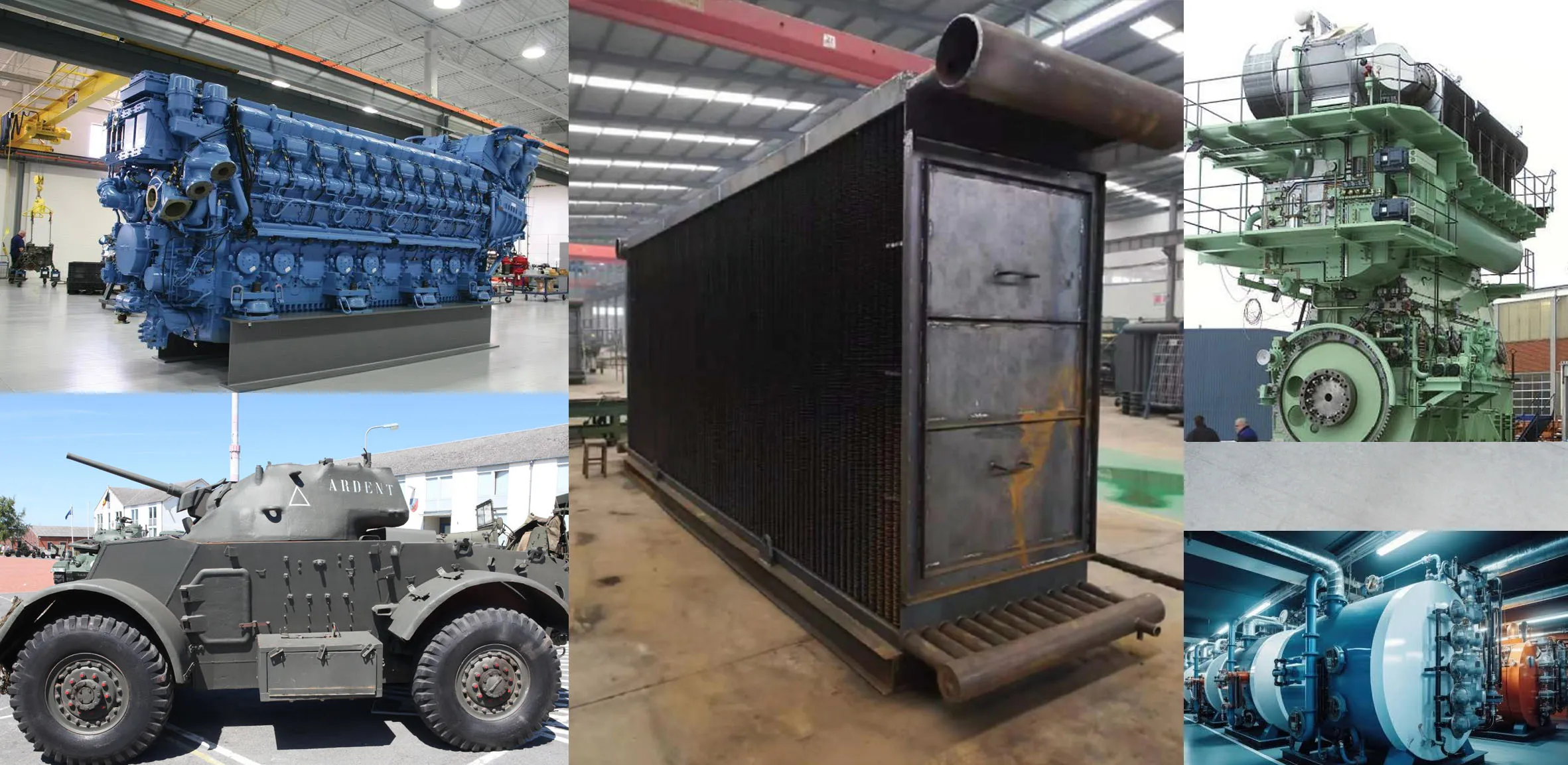
A military flue gas heat exchanger addresses both problems. It recovers exhaust waste heat for reuse while lowering exhaust gas temperature. The result is better fuel efficiency, reduced infrared signature, and more reliable thermal management in harsh environments.
This article outlines the main military applications of flue gas heat exchangers, key design requirements, and selection considerations. For product specifications and selection support, see the flue gas heat exchanger product page.
Why Military Applications Need Flue Gas Heat Exchangers
Military platforms and bases face conditions that make exhaust waste heat recovery especially valuable:
1. Fuel Logistics and Operational Range
Forward operating bases, tactical generators, naval vessels, and vehicle fleets consume large amounts of fuel. Every reduction in fuel consumption lowers logistics burden and reduces the number of fuel supply convoys exposed to risk.
Recovering exhaust waste heat can preheat water, generate hot air, support space heating, or provide steam for auxiliary systems. This reduces the fuel needed for separate heating equipment.
2. Thermal Signature Reduction
High-temperature exhaust gas is a strong infrared signal. Vehicles, generators, and ships can be detected by thermal imaging systems because of hot exhaust plumes.
A high temperature flue gas heat exchanger can cool exhaust gas before release. Lower exhaust temperature reduces the infrared contrast between the platform and the background, supporting thermal signature management.
3. Harsh Environment Reliability
Military equipment must operate in dust, sand, salt spray, vibration, and extreme temperatures. A well-designed exhaust gas heat exchanger uses:
- No moving parts
- Corrosion-resistant alloys
- Compact, rugged construction
- Low maintenance requirements
- Anti-fouling flow channels
These features improve reliability in field conditions.
Key Military Application Scenarios
Tactical Generators and Forward Operating Bases
Diesel generators at forward bases run continuously and discharge high-temperature exhaust. A flue gas heat exchanger can recover this heat for:
- Hot water supply
- Space heating
- Water purification support
- Battery or equipment warming
- Drying and laundry systems
This reduces the fuel required for separate boilers or heaters and lowers the base's overall fuel demand.
Armored Vehicles and Military Trucks
Armored vehicles, tanks, and military trucks produce hot exhaust gas. Recovered heat can be used for:
- Crew compartment heating
- Engine preheating in cold climates
- Battery thermal management
- Auxiliary power system support
At the same time, reducing exhaust temperature can help lower the vehicle's thermal signature.
Naval Vessels and Military Ships
Naval diesel engines and gas turbines generate large volumes of high-temperature exhaust. A naval exhaust heat recovery system can transfer heat to water, steam, or thermal oil for:
- Shipboard hot water
- Auxiliary steam
- Absorption cooling
- Heating systems
Cooling the exhaust before release also supports infrared signature reduction.
Military Aviation Ground Support and UAV Ground Stations
Ground support generators, mobile power units, and UAV ground control stations also produce exhaust heat. Compact flue gas heat exchangers can recover this heat for shelter heating, equipment warming, and hot water supply.
Fixed Military Facilities and Shelters
Base boilers, backup generators, and heating plants can use flue gas heat exchangers to improve energy efficiency. Recovered heat can support:
- Barrack heating
- Hot water supply
- Ventilation air preheating
- Process drying
This is especially useful where fuel supply is limited or expensive.
Design Requirements for Military Exhaust Heat Recovery
Military exhaust heat recovery is not the same as standard industrial heat recovery. Key requirements include:
| Requirement | Consideration |
|---|---|
| High temperature resistance | Inlet flue gas can reach 150 – 1,100 °C |
| Corrosion resistance | Sulfur-rich fuels can form acidic condensate |
| Low pressure drop | Excessive backpressure reduces engine or generator efficiency |
| Compact structure | Limited space on vehicles, ships, and mobile shelters |
| Rugged construction | Vibration, shock, dust, sand and salt spray |
| Low maintenance | No moving parts and anti-fouling design |
| Modular installation | Easy retrofit into existing exhaust systems |
Technical Specifications at a Glance
| Parameter | Typical Range | Remarks |
|---|---|---|
| Flue gas flow rate | 1,000 – 500,000 Nm³/h | Customizable per project |
| Inlet flue gas temperature | 150 – 1,100 °C | Medium & high temperature |
| Outlet flue gas temperature | 80 – 200 °C | Above acid dew point option |
| Working medium | Water / Air / Steam / Thermal oil | Selected by application |
| Heat recovery efficiency | Up to 90% | Depends on flue gas conditions |
| Pressure drop | Low pressure drop design | Optimized flow channel |
| Material | Carbon steel / Stainless steel / Corrosion-resistant alloy | Anti-corrosion options |
| Structure | Skid-mounted, modular | Easy retrofit into existing pipelines |
These are typical reference values. Actual selection depends on exhaust flow rate, temperature, fuel type, space limits, and thermal signature requirements.
How to Select a Military Flue Gas Heat Exchanger
To select the right unit, provide the following project data:
- Exhaust gas flow rate
- Inlet exhaust temperature
- Target outlet temperature
- Working medium: water, air, steam, or thermal oil
- Required heat output
- Fuel type and sulfur content
- Dust or particulate level
- Available installation space
- Backpressure limits
- Infrared signature reduction target
With these parameters, a tailored thermal simulation and structural design can be provided.
Frequently Asked Questions
What is a military flue gas heat exchanger used for?
A military flue gas heat exchanger recovers waste heat from generator, vehicle, ship, or boiler exhaust. The recovered heat can be used for heating, hot water, steam, drying, or auxiliary power support. It can also lower exhaust temperature to support thermal signature reduction.
Can a flue gas heat exchanger reduce infrared signature?
Yes. By cooling exhaust gas before release, a flue gas heat exchanger can reduce the infrared contrast of the exhaust plume. This supports thermal signature management for vehicles, generators, and naval vessels.
What materials are used for military exhaust heat exchangers?
Common materials include carbon steel, stainless steel, and corrosion-resistant alloys. The choice depends on exhaust temperature, fuel sulfur content, acid dew point, dust level, and expected service life.
Can it be used on tactical generators?
Yes. Tactical diesel generators are a common application. Recovered heat can support base heating, hot water, and equipment warming while reducing fuel demand.
How do I request product information?
For specifications, material options, and selection support, visit the flue gas heat exchanger product page and submit an inquiry with your project parameters.
Recover Exhaust Heat. Reduce Thermal Signature. Improve Fuel Efficiency.
Military flue gas heat exchangers turn wasted exhaust heat into usable thermal energy. They support fuel savings, base heating, naval auxiliary systems, vehicle thermal management, and infrared signature reduction.
For military exhaust waste heat recovery projects, review the flue gas heat exchanger product page and send your project data for a tailored selection.