Application: Naval & Defense Thermal System Technology Application
Industry applications about vapor chambers, printed circuit heat exchangers (PCHE), marine gas turbine intercoolers and defense electronics thermal management.
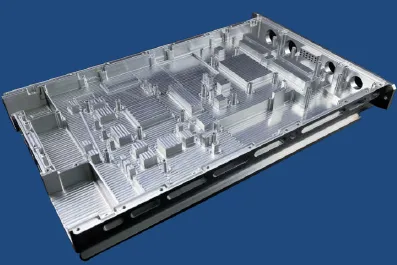
Vapor Chamber (VC) Thermal Solutions for Military Equipment: Working Principle and Core Benefits
Modern military electronic systems are continuously pushing for higher power density, lighter weight, and stable performance under extreme operating environments. Radar units, onboard computers, directed energy weapons, unmanned aerial vehicles (UAVs), and portable battlefield communication hardware all generate concentrated heat loads during operation. Without effective thermal management, hotspots can degrade component performance, trigger unexpected shutdowns, and shorten the service life of
Read More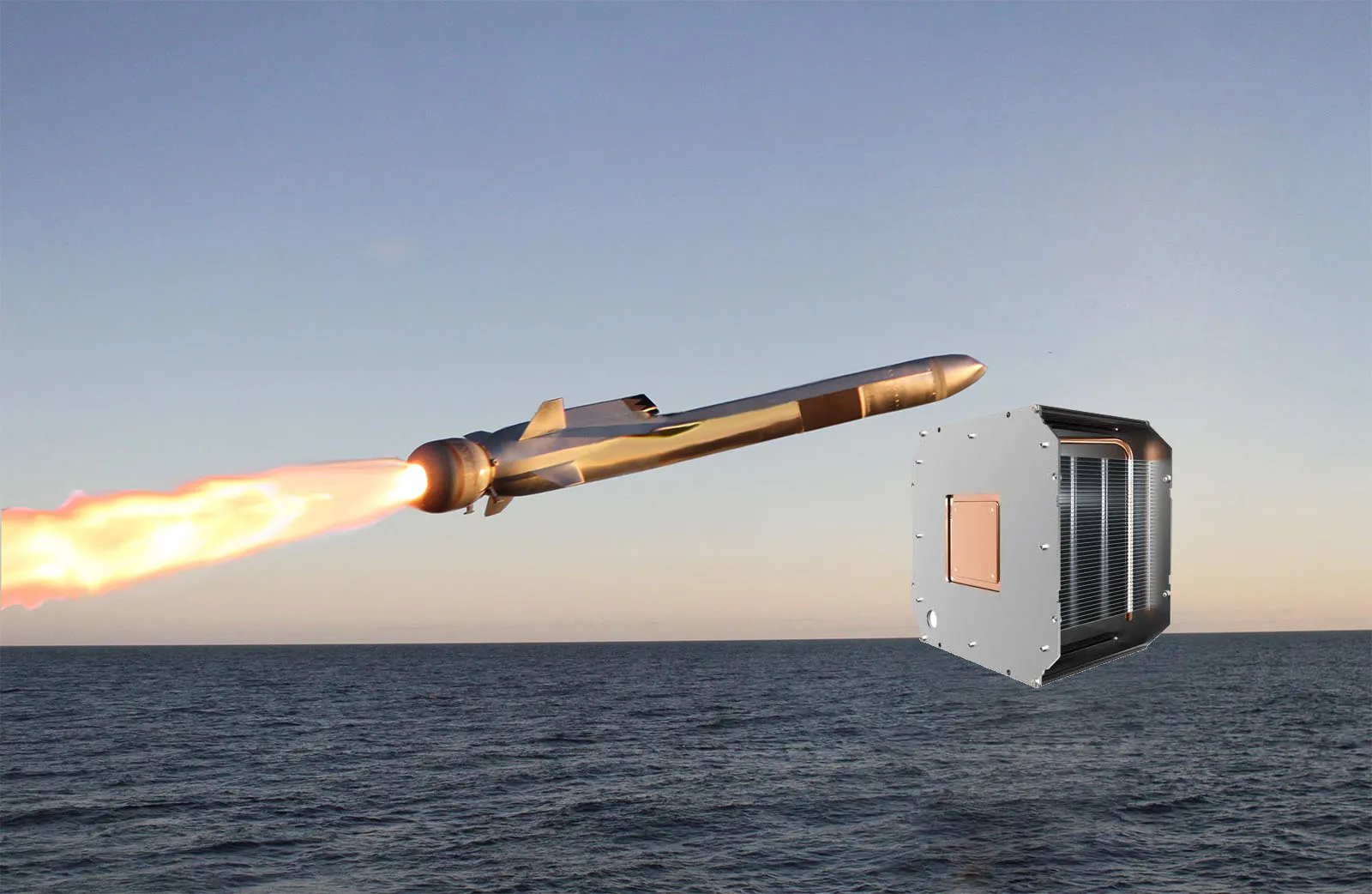
Vapor Chamber Applications in Missile Thermal Management
Introduction Modern missiles face extreme thermal conditions. High-power electronic devices are packed into very small spaces. Local heat flux can reach tens or even hundreds of watts per square centimeter. Traditional solid conduction and natural convection are no longer enough to cool these systems effectively. A vapor chamber is a flat heat pipe that uses phase change to spread heat across a surface. It has extremely high effective thermal conductivity, excellent temperature uniformity, a co
Read More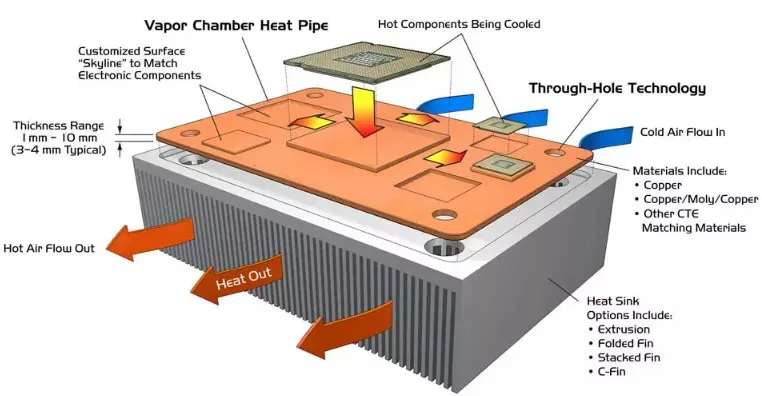
Vapor Chamber Cooling: Real‑World Design Tips for Electronics Thermal Management
Modern high‑power electronics push thermal designers into a tight corner. CPUs, GPUs, gaming hardware, data‑center boards and compact consumer devices all generate concentrated heat flux that standard solid‑metal heat sinks often struggle to handle. Many engineers turn to vapor chamber cooling for better heat spreading — but vapor chambers are not a “one‑size‑fits‑all” fix. In decades of building custom thermal assemblies, our engineering team has seen projects succeed and fail based on simple
Read More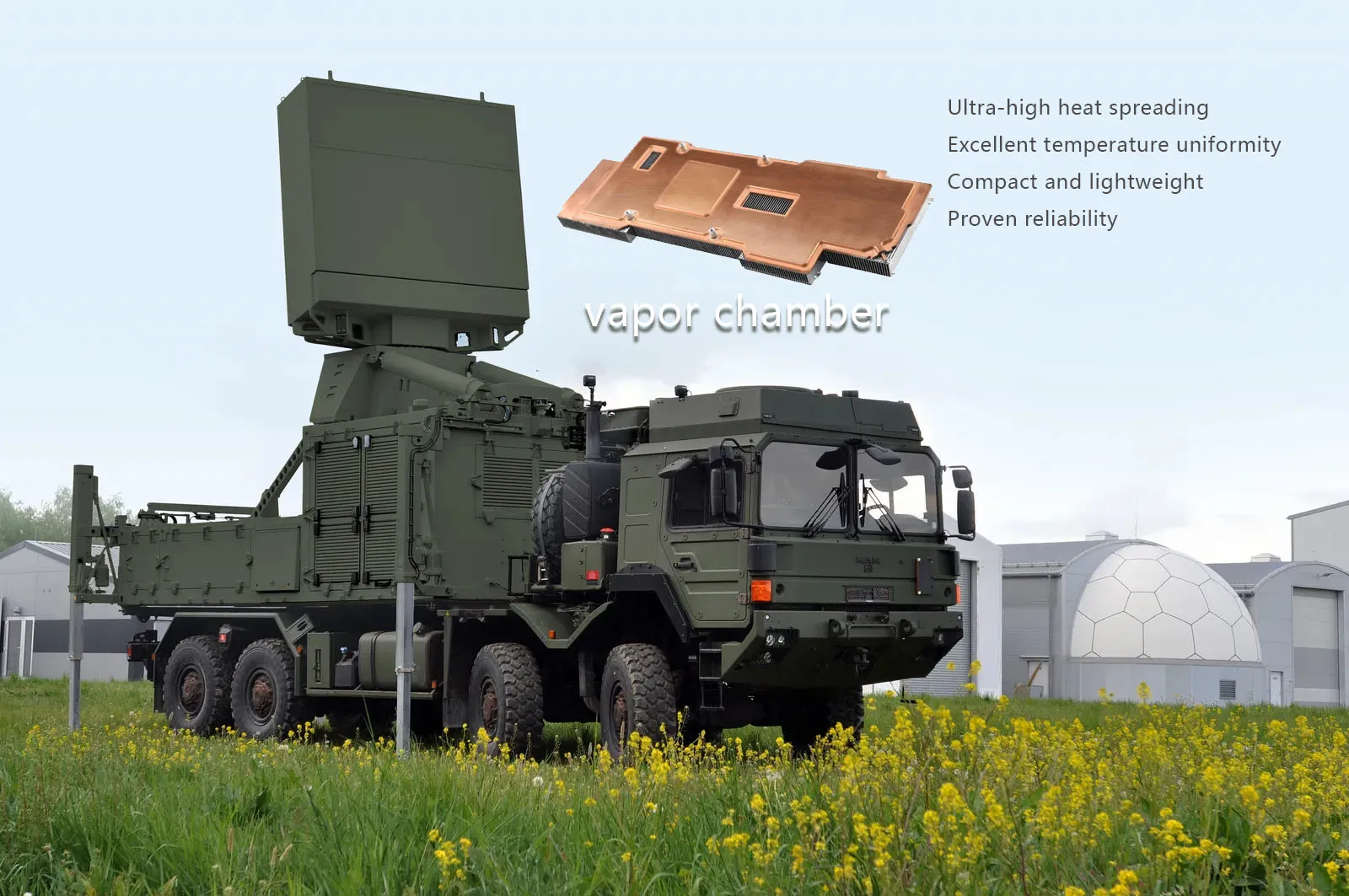
Vapor Chamber Thermal Management for AESA Radar: Applications and Benefits
Active Electronically Scanned Array (AESA) radar systems generate immense heat from hundreds of densely packed T/R modules. Effective thermal control is now a decisive factor in radar performance, reliability, and service life. Vapor chamber technology—a phase‑change cooling solution—has emerged as a core enabler, offering exceptional heat spreading and temperature uniformity. This article reviews the working principles, integration approaches, real‑world use cases, and emerging trends of vapor
Read More