Modern military electronic systems are continuously pushing for higher power density, lighter weight, and stable performance under extreme operating environments. Radar units, onboard computers, directed energy weapons, unmanned aerial vehicles (UAVs), and portable battlefield communication hardware all generate concentrated heat loads during operation. Without effective thermal management, hotspots can degrade component performance, trigger unexpected shutdowns, and shorten the service life of critical military assets. Vapor Chamber (VC) technology has emerged as a proven high-performance thermal solution to address these tough battlefield cooling challenges.
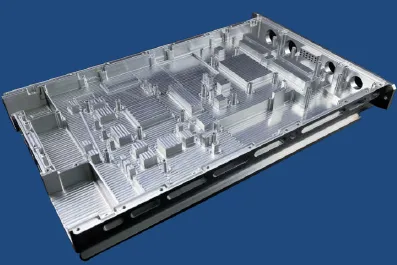
How a Vapor Chamber Operates
A vapor chamber is a flat, sealed two-phase heat transfer device that relies on phase change cycles to move heat efficiently. Its internal structure contains porous capillary wick structures and a small amount of working fluid, commonly purified water, ethanol or ammonia. The heat transfer process follows a closed-loop cycle:
- Heat absorption at the heat source: When the VC plate contacts heated electronic components, heat quickly transfers into the chamber and is absorbed by the working fluid.
- Liquid evaporation: The working fluid absorbs latent heat and turns into vapor. This phase change process removes large amounts of heat from localized hot spots rapidly.
- Vapor transportation: The vapor spreads rapidly across the inner cavity toward cooler regions of the vapor chamber. Vapor transport has extremely low thermal resistance compared with solid metal conduction.
- Condensation and heat rejection: Upon reaching the cold side of the chamber, vapor condenses back into liquid form and releases stored latent heat. The released heat then transfers to attached heat sinks or external cooling loops for dissipation to the ambient environment.
- Capillary-driven liquid return: Condensed liquid flows back to the hot side through the porous wick material, restarting the evaporation-condensation cycle. This continuous circulation sustains uniform temperature distribution across the entire plate.
Key Advantages of Vapor Chambers for Military Use
Compared with traditional solid metal heat spreaders, vapor chambers deliver distinct strengths that match military operational requirements.
High heat transfer efficiency Two-phase heat transfer using latent heat offers far superior thermal conductivity than copper or aluminum. VC spreaders can handle high heat flux spikes that often appear in high-power military electronics.
Excellent temperature uniformity The vapor phase rapidly equalizes surface temperature, eliminating sharp hotspots. Even under uneven heat loading, component surface temperature stays consistent, preventing thermal stress and electronic failure.
Lightweight form factor Weight reduction is critical for missiles, drones, and man-carried battlefield devices. Thin-profile vapor chambers deliver strong heat spreading performance without adding excessive mass, helping improve payload capacity and mobility.
Robust mechanical reliability Vapor chambers contain no moving mechanical parts. Well-engineered VC units can withstand heavy vibration, shock, high humidity, and wide temperature swings seen in ground vehicles, aircraft and space platforms. The risk of mechanical breakdown under harsh field conditions remains low.
Fast thermal response Military systems often experience sudden power surges and rapid heat generation. Vapor chambers respond instantly to transient heat loads to suppress temperature spikes and protect sensitive semiconductors.
Compact and flexible packaging VCs can be manufactured into thin flat panels and custom shapes to fit cramped internal equipment spaces. Designers can integrate vapor chambers seamlessly into compact electronic assemblies without major redesigns.
Typical Military Application Scenarios
Vapor chamber thermal spreaders are deployed across multiple categories of defense hardware.
Radar systems High-power phased array radar modules produce dense localized heat. Vapor chambers spread heat evenly to maintain stable radar output and extend the working lifespan of transmit-receive components.
Missiles and space-borne electronics Missile avionics and satellite payloads face drastic temperature shifts during flight or orbital operation. Lightweight VC hardware stabilizes electronics under rapid thermal cycling while keeping payload weight under control.
High-energy laser systems Precision laser weapons require tight temperature control to preserve beam quality and consistent power output. Vapor chambers remove concentrated waste heat and reduce thermal distortion of optical assemblies.
Military communication infrastructure Field-deployed communication stations operate in dusty, hot or humid outdoor environments. VC cooling maintains stable signal processing performance under variable ambient conditions.
Unmanned aerial vehicles (UAVs) Drone flight controllers, power modules and image sensors generate heat during continuous flight. Vapor chamber cooling prevents overheating and mid-air electronic faults.
Armored vehicle electronics Onboard computing, sensing and control systems inside combat vehicles endure persistent vibration and high cabin temperatures. Ruggedized vapor chambers support long-duration operation without thermal failure.
Portable military communication gear Soldier-carried radios and handheld battlefield terminals demand both light weight and reliable cooling. Miniature vapor chambers help avoid overheating during extended field use.
Military servers and high-performance computing Defense data processing hardware runs at sustained high computing loads. Vapor chamber heat spreading mitigates thermal runaway and maintains stable computing performance.
Frequently Asked Questions
How does a vapor chamber differ from a heat pipe?
A heat pipe transfers heat along a single axis, while a vapor chamber spreads heat in two dimensions across a flat plane. This makes vapor chambers better suited for cooling concentrated, high-flux heat sources such as military radar modules, laser diodes and high-performance computing boards, where heat must be spread evenly over a larger area before rejection.
Can vapor chambers withstand military shock and vibration?
Yes. Vapor chambers contain no moving mechanical parts, so well-engineered units can pass MIL-STD-810 shock, vibration and thermal cycling requirements. The sealed metal envelope and sintered wick structure are the key design factors that determine ruggedness in airborne, ground vehicle and space platforms.
What working fluids are used in military vapor chambers?
Purified water is the most common working fluid for operating ranges around 30°C to 120°C. Ethanol and methanol are used for lower-temperature applications, while ammonia is preferred for cryogenic or sub-zero environments such as high-altitude UAV payloads and space-borne electronics.
How much weight does a vapor chamber add compared with a solid copper heat spreader?
A thin-profile vapor chamber typically weighs 30% to 60% less than a solid copper spreader offering equivalent heat spreading performance. This weight saving is critical for missiles, drones and soldier-carried equipment where every gram affects payload capacity and mobility.
Can vapor chambers be custom-shaped for tight military enclosures?
Yes. Vapor chambers can be manufactured in flat, bent, stepped and custom outline shapes to fit cramped internal equipment spaces. G2 Defense provides custom VC design and prototyping for radar, avionics, laser and portable communication hardware.
Conclusion
Vapor chamber two-phase thermal technology solves many tough thermal management problems in modern military electronic hardware. Its combination of high heat spreading capability, uniform temperature performance, low weight, vibration resistance and compact form factor makes it a preferred cooling solution across airborne, ground, space and portable defense systems. As military electronics keep increasing power density, vapor chamber thermal spreaders will continue to play an essential role in improving equipment stability, reliability and survivability in extreme operational environments.
Need a custom vapor chamber for your defense platform?
G2 Defense engineers design and manufacture military-grade vapor chamber thermal spreaders, liquid cooling cold plates and heat exchangers for airborne, ground, space and portable applications.
Request a thermal design consultation View vapor chamber specs