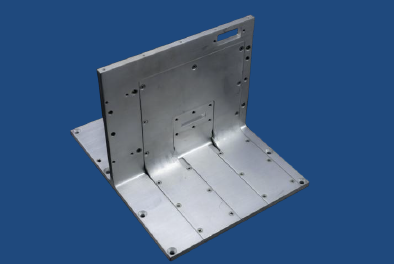
Vapor Chamber – High‑Reliability Two‑Phase Heat Spreader for Military High‑Power Thermal Management
G2 Defense vapor chamber is a military-grade two-phase heat spreading component designed for high-heat-flux sealed electronic systems. With ultra-high equivalent thermal conductivity and fully sealed capillary structure, our VC efficiently eliminates local hotspots, stabilizes device temperature, and ensures long-term reliability for military, aerospace, RF and high-power industrial equipment. Verified by multiple military environmental tests, the product supports customized shapes, embedded installation and special structural design to meet strict enclosure integration requirements.
✅ Superior heat transfer, equivalent thermal conductivity>20,000 W/m・K
✅ Supports heat flux up to 200 W/cm² for power devices
✅ Military‑grade reliability, vibratio
Core Features
- Outstanding heat spreading performance, far exceeding solid copper / aluminum plate and ordinary heat pipes
- Simple two‑phase circulation principle, gravity‑insensitive heat transfer
- Robust sealed structure, adapted to harsh military environmental conditions
- Integrated plate‑embedded VC structure, reduces thermal contact resistance
- Fully customizable outline, dimension and internal wick structure
Key Technical Performance
| Item | Specification |
|---|---|
| Equivalent Thermal Conductivity | >20,000 W/m·K |
| Max Supported Heat Flux | >200 W/cm² |
| Service Life | >30 years (accelerated test verified) |
| Core Structure | Sealed cavity + internal capillary wick + working fluid |
| Service Condition | High temperature, vibration, thermal cycling & thermal shock environment |
| Customization | Shape, dimension, embedded‑plate structure supported |
Working Principle
The vapor chamber consists of a hermetically sealed enclosure, capillary wick structure attached to inner walls and internal working fluid.
- Liquid working fluid absorbs heat from heat source and vaporizes.
- Vapor spreads rapidly across the whole chamber to cold cooling zone.
- Vapor condenses and releases heat at cooling area.
- Condensed liquid flows back to heat source driven by capillary force.
This continuous two‑phase circulation realizes efficient two‑dimensional heat spreading, and its performance is not affected by gravity orientation.
Reliability & Lifespan
Our vapor chamber has completed a full set of accelerated reliability qualification tests for military applications:
- High‑temperature accelerated aging test
- Vibration intensity test
- Thermal cycling & thermal shock test
Test results validate stable long‑term operation with expected service life over 30 years, suitable for long‑life sealed military equipment.
Performance Benchmark Test (VC vs Solid Metal Plate)
Real test data under same heat source condition
| Test Case | Heat Source | Solution | Chip Temperature |
|---|---|---|---|
| A. RF Component Housing | 50W Chip (15 mm × 15 mm) | Solid Copper Plate | 108 °C |
| A. RF Component Housing | 50W Chip (15 mm × 15 mm) | G2 Defense Vapor Chamber | <70 °C |
| B. Digital Processing Module Heat Spreader | Three ×40W Chips | Solid Aluminum Plate | ~80 °C |
| B. Digital Processing Module Heat Spreader | Three ×40W Chips | G2 Defense Vapor Chamber | 60 °C |
Note:Vapor chamber greatly lowers junction temperature, eliminates hot‑spots and improves whole‑device reliability.
Custom Capability
We provide full custom service for vapor chamber:
- Custom outline, thickness and geometry shape
- VC‑in‑plate integrated structure design, embed VC inside base plate
- Optimize capillary structure according to your heat flux, layout and installation orientation
- Fit for sealed enclosure integration requirements
Tell us your heat‑source power, dimension constraints and environmental requirements, our thermal team will offer tailored solution.
Typical Applications
- Plug‑in modules (PowerPC etc.) inside sealed military enclosures
- RF amplifier circuit component housings
- High‑power power supply module housings
- High‑power LED heat spreading plates
- Other high‑heat‑flux electronic thermal management scenarios
FAQ
Q1: Is vapor chamber performance affected by installation orientation / gravity?
A: Mainly driven by capillary wick force; normal performance under multiple installation orientations. Special wick design for extreme orientation requirements upon request.
Q2: What test standards can your VC meet?
A: We support military‑level vibration, thermal shock and high‑temperature aging tests; provide test summary report.
Q3: Can you embed vapor chamber inside customer’s base plate/housing?
A: Yes, integrated VC‑in‑plate structure is one of our core offerings.
Q4: What information should I provide for quotation?
A: Heat source power & size, target temperature limit, overall dimension limit, working environment, quantity and sample requirement.
Ready for your vapor chamber thermal solution?
Ready for your vapor chamber thermal solution?
Share your thermal requirement, heat‑flux data and mechanical constraints. Our engineering team will reply with proposal and quotation.