As gallium nitride (GaN) semiconductors revolutionize defense electronics, thermal management has emerged as the critical bottleneck determining system performance and mission reliability. Vapor chamber two-phase heat spreaders are rapidly transitioning from specialized niche components to essential thermal hardware across modern military electronic platforms — from airborne radar arrays to ship-borne communication systems and vehicle-mounted computing modules.
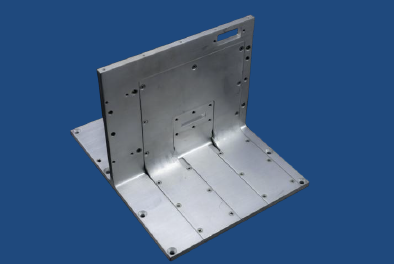
The Thermal Challenge in Modern Defense Electronics
New-generation AESA radar subarrays, electronic warfare (EW) payloads, and VPX rugged computing systems increasingly adopt GaN semiconductor technology to achieve superior signal output power and faster data processing speeds. However, this performance gain comes at a significant thermal cost: GaN devices generate extremely high localized heat flux densities within increasingly confined internal volumes.
Traditional cooling approaches — standard copper heat sinks and conventional heat pipes — struggle to uniformly distribute these intense thermal loads. The result is thermal concentration hotspots that accelerate performance degradation, reduce component lifespan, and pose serious reliability risks for mission-critical military equipment operating in sealed, rugged enclosures.
Why Defense-Grade Vapor Chambers Outperform Traditional Solutions
Defense-grade vapor chambers deliver irreplaceable value where conventional thermal solutions reach their limits. Unlike consumer-level vapor chambers deployed in civilian electronics, military-grade vapor chambers are engineered and manufactured exclusively for extreme battlefield and aerospace environments. Every unit undergoes rigorous qualification testing including:
- Mechanical shock testing per MIL-STD-810 standards
- Random vibration cycling simulation
- Wide-range temperature fluctuation verification (-55°C to +125°C)
- Professional helium mass spectrometer leak detection
These validation protocols ensure stable two-phase heat transfer performance throughout extended service cycles, even under the most demanding operational conditions.
Core Technologies Enabling Military Vapor Chamber Reliability
Two manufacturing technologies form the foundation of defense vapor chamber performance:
High-Precision Sintered Wick Structures — Advanced powder metallurgy techniques create capillary wick structures with precisely controlled pore sizes, enabling efficient working fluid return from condenser to evaporator regions under any orientation.
Full Vacuum Brazing Sealing Processes — Hermetic sealing achieved through vacuum brazing eliminates all potential leakage paths, ensuring the vapor chamber maintains perfect internal vacuum throughout its operational lifetime.
Unlike commercial heat dissipation components, military vapor chambers must sustain stable internal working fluid circulation under complex attitude changes, sustained vibration, and varying gravitational loads. The military specification is uncompromising: zero dry-out failures, zero performance decay, and zero air leakage — these are baseline requirements, not optional features.
Application Spectrum: From Medium-Power to High-Power Defense Systems
The defense thermal engineering community has established clear application boundaries for vapor chamber deployment:
Medium-Power Applications (Below 200W): For rugged embedded modules in this power range, vapor chambers represent the optimal balance of cost-effectiveness and reliability. Their passive design delivers zero moving parts, zero acoustic noise, and zero maintenance — critical advantages for:
- Vehicle-mounted communication terminals
- Airborne avionics modules
- Ship-borne signal processing units
- Field reconnaissance and surveillance equipment
High-Power Applications (Exceeding 200W): Military AI computing systems and high-energy radar transmitters generating heat loads above 200W typically employ vapor chambers in hybrid cooling architectures. The vapor chamber handles passive heat homogenization across the heat source surface, while liquid cold plates provide active heat rejection — creating a two-stage thermal management solution that balances lightweight design with high-efficiency cooling. This hybrid approach has become the dominant thermal architecture for next-generation defense electronic systems.
Domestic Supply Chain Maturation and Future Outlook
The domestic defense thermal management supply chain has matured significantly in recent years. Custom-shaped, ultra-thin, high-strength military vapor chambers have achieved independent mass production capabilities, effectively reducing long-term dependence on imported high-end two-phase heat spreaders. For organizations seeking proven vapor chamber solutions, domestic manufacturers now offer comparable performance at competitive pricing.
Defense integrators and research institutions are increasingly moving beyond standardized off-the-shelf components toward integrated thermal-structural customized solutions. In these approaches, vapor chambers are pre-embedded and pre-assembled during system integration, significantly simplifying overall installation processes and improving equipment consistency across production batches.
As defense electronics continue advancing toward greater miniaturization, higher integration density, and increased power consumption, vapor chambers will remain indispensable core components in military thermal management. Continued improvements in sintering processes, sealing technologies, and structural customization capabilities will further expand their application footprint across aerospace, ground defense, and maritime combat platforms.
About G2 Defense — Your Military Thermal Management Partner
G2 Defense Technology provides fully customized military-grade vapor chambers, phase-change plates, and comprehensive thermal cooling solutions for defense research institutes and military equipment manufacturers worldwide. All products support military standard environmental testing and bespoke structural development — ensuring optimal thermal performance tailored to your specific mission requirements.